The Methodology of Historic Window Restoration
Restoring historic windows isn’t merely about cosmetic refurbishment. It is a systematic process of forensic examination, careful stabilization, and technical re-commissioning of an architectural mechanism.
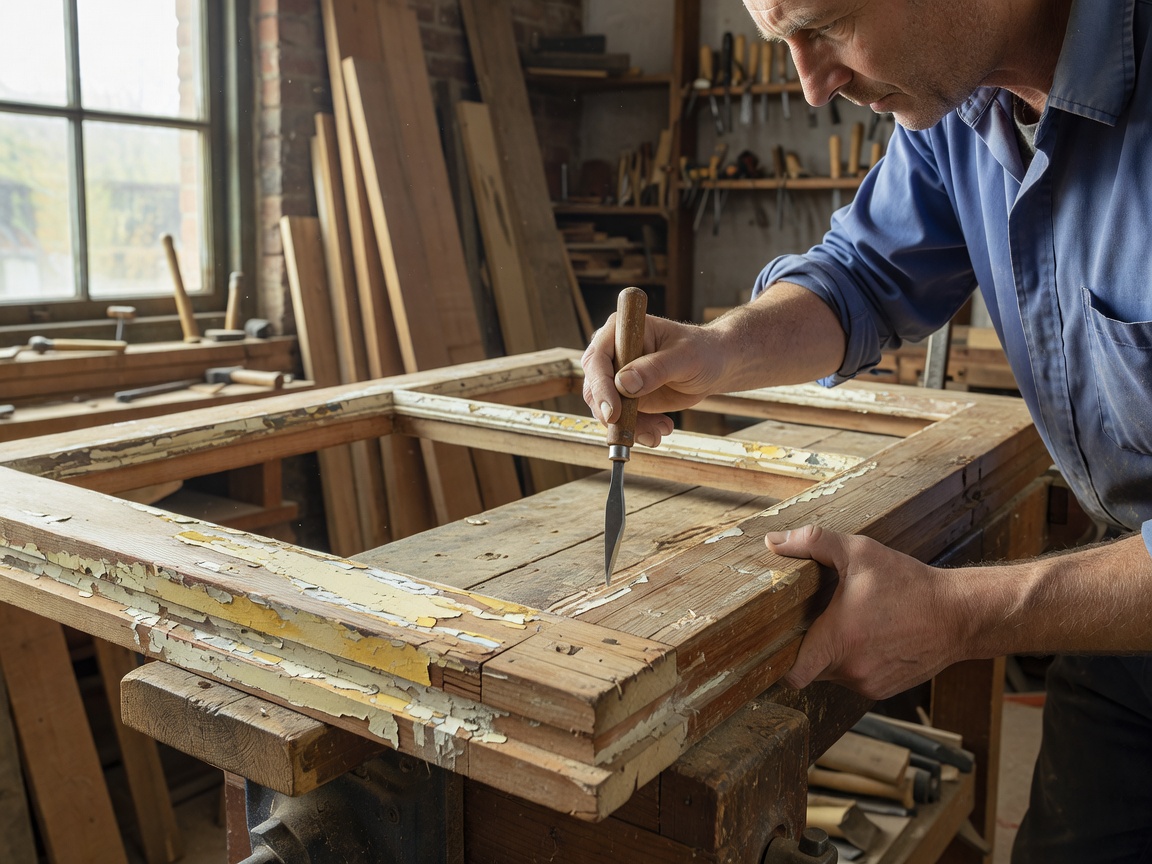
Phase One: Forensic Inspection & Condition Mapping
Before a single screw is backed out or a strip of paint softened, every element of the window opening must be evaluated in situ. We map four distinct zones: the outer masonry reveal and stone sill, the structural timber subframe (box or casing), the operable sashes or casements, and the mechanical counterweight or hinge system.
Why Restoration Differs Fundamentally from Replacement
It's common for property owners to receive quotes suggesting total window replacement as the only answer to cold rooms, rattling frames, or flaking exterior paint. Yet in traditional European architecture—ranging from Georgian townhouses in Bath to 19th-century Haussmannian apartments in Paris and canal dwellings in Amsterdam—the original windows were constructed specifically for the structure they inhabit.
Traditional timber components were typically milled from slow-grown northern European Scots pine (often termed red Baltic pine) or English and European oak. These trees grew densely over 150 to 200 years, yielding timber with closely packed growth rings rich in natural pitch and resin. Consequently, a historic sash that looks weathered on the surface often maintains uncompromised, rock-solid timber just two millimetres beneath aged coatings. Modern kiln-dried plantation timber rarely exhibits comparable fungal resilience.
"Replacing historic fenestration with standard modern units frequently trades a 150-year-old maintainable assembly for a 20-year consumable commodity with unrepairable failure modes."
Step-by-Step Restoration Sequence
A proper conservation restoration avoids aggressive sandblasting or high-heat open flame, which can crack fragile old glass and scorch the wood fiber. Instead, an orderly sequence guarantees structural integrity:
- Labeling and In-Situ Indexing: Every sash, bead, fastener, and weight is tagged according to floor, room, and elevation index. Historic joinery is bespoke; parts rarely interchange smoothly across different openings.
- Careful Sash Extraction: Staff beads and parting beads are eased out using wide, thin pry spatulas. Cords are clamped before severing to prevent counterweights from dropping into the sash pockets.
- Controlled Paint Removal: Thick layers of impermeable alkyd or acrylic paints—which trap moisture against the wood—are softened using low-temperature infrared heating devices or gentle poultice paste strippers.
- Glazing Bed Evaluation: Brittle, crumbly linseed oil putty is delicately raked out. Original cylinder or crown glass panes are carefully labelled and set aside for cleaning.
- Targeted Timber Repairs: Decayed timber is cut back cleanly to solid heartwood and repaired with seasoned timber splices (Dutchman joints) rather than excessive chemical fillers.
- Priming with Pure Linseed Oil: Raw timber rebates are saturated with boiled linseed oil cut with pure gum turpentine. This quenches the dry wood so it won't pull the binder oil out of fresh glazing putty.
- Re-Glazing and Putty Beveling: Original glass is re-bedded in traditional linseed oil and whiting putty, secured with brass glazing sprigs, and struck off at a crisp 45-degree angle slightly below the sightline.
- Weight Balancing and Re-hanging: Sashes are weighed on calibrated spring scales, and cast iron or lead sash weights are adjusted to provide fingertip-smooth vertical movement.
Advantages of Restoration
- Retains the irreplaceable historic character, wavy glass reflections, and authentic shadow lines.
- Conserves dense, old-growth timber far superior to modern commercial softwoods.
- Avoids disruptive masonry, plaster, and interior architrave demolition.
- Infinitely maintainable through routine re-painting and re-pointing of putty.
Practical Realities to Plan For
- Labor-intensive manual processes demand skilled restoration joiners.
- Historic single glazing requires secondary interior glazing to achieve deep thermal insulation.
- Linseed oil coatings require a deliberate, progressive drying timeline compared to instant synthetic paints.
Draught Proofing Without Altering Proportions
One of the primary complaints about period windows is cold air infiltration. However, cold drafts rarely originate through the glass itself; they pass around the perimeter gaps required for sashes to slide freely.
Modern conservation practice resolves this by routing miniature, concealed carrier channels into the back of replacement parting beads and staff beads. Soft mohair brush piles or low-friction silicone tubing are seated directly into these timber beads. When the window closes, the seals touch the sash without causing mechanical drag or leaving any synthetic material visible from the exterior.
When This Approach is Best
Full window restoration is the prime recommendation when existing frames retain at least 60% sound timber, when historic profile details remain intact, or when local municipal conservation regulations protect the building’s exterior façade.
Essential Things to Know
Lead-based paints are commonly present in layers applied prior to the mid-20th century. Dustless scraping, HEPA-filtered vacuum attachments, and wet-shaving methods must be used to ensure health and environmental safety.