Historic Glazing: Visual Character, Compounds & Thermal Care
Hand-made glass gives period façades their lively, shimmering reflections. Understanding historical glass types and working with authentic putty beds allows property custodians to retain visual authenticity while significantly improving interior comfort.
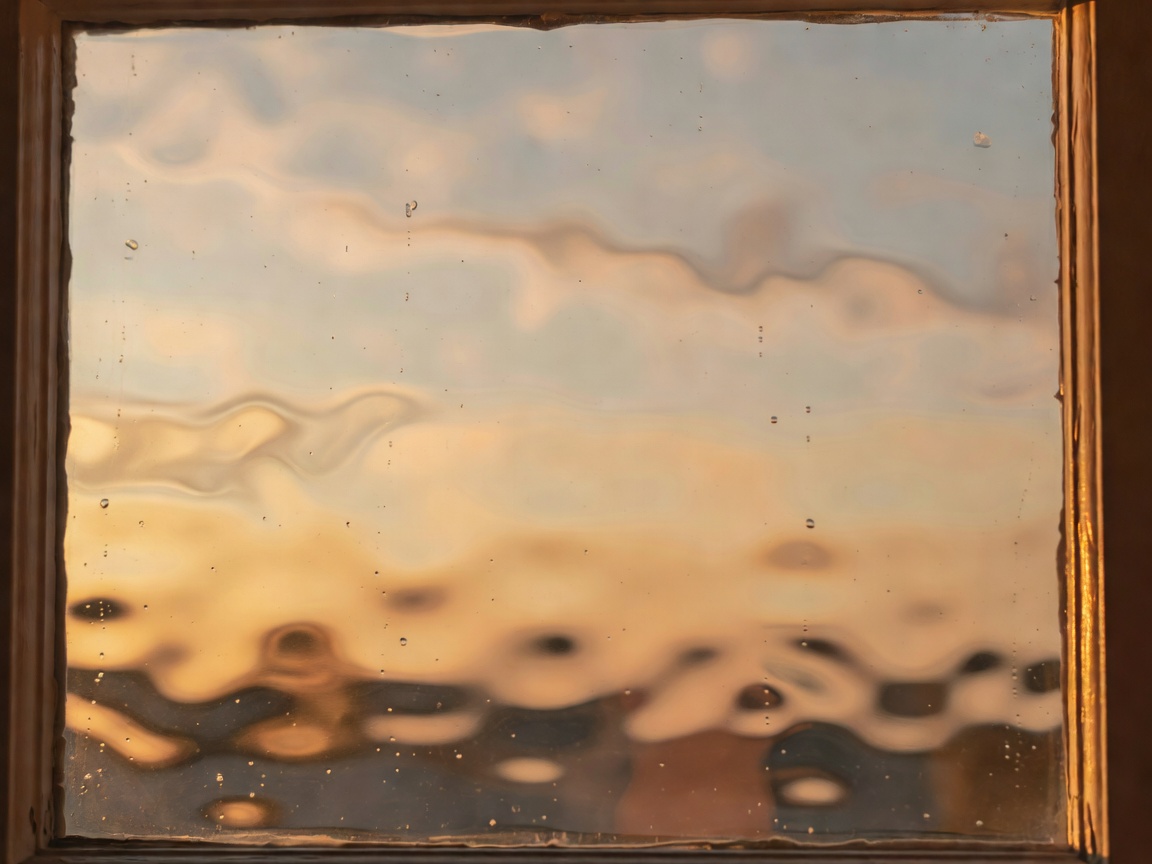
The Optical Fingerprint of Antique Glass
Modern float glass, perfected in the late 1950s, is optically flat and sterile. In contrast, historic panes contain gentle variations in thickness, elongated air bubbles (known as seeds), and subtle ripples (known as reams). These variations refract natural daylight into interiors with unique warmth and create soft, dynamic reflections across historic façades.
A Brief Overview of Historic Window Glass
When managing a heritage building, identifying your glass helps date original fabric and prevent unintended disposal of rare materials:
1. Crown Glass (Pre-1840s)
Produced by blowing a molten glass bubble, piercing it, and spinning it rapidly on an iron rod (pontil) until centrifugal force flattened it into a circular disc (a table). Crown glass features concentric, gentle curved wave lines radiating from the center bullseye. The glass is thin, remarkably brilliant, and commands the highest conservation priority.
2. Cylinder Glass / Broad Glass (Mid-19th to Early 20th Century)
Glassmakers blew large hollow cylinders, cut off the hemispherical ends, slit the cylinder lengthwise, and placed it in a flattening kiln. This process enabled much larger pane sizes for Victorian and Edwardian buildings. The optical distortion runs in straight, parallel striations rather than concentric arcs.
3. Machine Drawn Sheet Glass (Fourcault & Libbey-Owens Processes, c. 1910–1955)
Molten glass was drawn vertically from a tank through forming rollers. While much more uniform than mouth-blown cylinder glass, machine-drawn panes still show faint linear waves that preserve period character far better than perfectly smooth float glass.
"When historic glass is discarded in favor of modern flat glass, the façade loses its lively texture, taking on a flat, lifeless appearance."
Glazing Compounds: Why Traditional Putty Matters
Historic glass was not held in place by wooden beadings and synthetic rubber gaskets. It rested on an unyielding bed of genuine linseed oil putty, composed of finely ground calcium carbonate (whiting) kneaded with pure boiled linseed oil.
Linseed putty cures through slow atmospheric oxidation rather than solvent evaporation. This curing process takes several weeks to form a tough outer skin while remaining pleasantly pliable beneath the surface. This flexible core absorbs thermal movement and building vibrations without cracking delicate glass.
When modern contractors glaze historic frames with silicone or quick-drying polyurethane mastics, two severe issues typically emerge:
- Capillary Moisture Traps: When silicone inevitably separates from the timber rebate after several seasons of UV exposure, it creates capillary channels that pull in rainwater and prevent it from drying out.
- Permanent Adhesion: Modern structural sealants bond so tenaciously to brittle antique glass that any future timber repair or pane replacement inevitably shatters the historic glass during extraction.
Secondary Glazing (Recommended)
- Retains 100% of original single-glazed sashes, historic putty, and cylinder glass.
- Creates a deep 80–120mm acoustic and thermal air cavity far wider than standard double-glazing.
- Easily reversible with zero permanent alteration to exterior architectural profiles.
- Significantly reduces window condensation on historic timber frames.
Slim Double-Glazing Units (Caution)
- Requires deepening existing timber rebates, permanently weakening slender historic glazing bars.
- The double reflection produces unnatural parallel optical mirror highlights.
- Perimeter gas seal degradation can cause internal misting within 5 to 15 years.
- Often rejected by local conservation authorities on designated heritage structures.
Thermal Balance: Mitigating Winter Heat Loss
Heritage homeowners often worry about single glazing's thermal performance. However, independent field studies demonstrate that up to 70% of heat loss through traditional windows occurs via drafts around the perimeter, rather than conductive transmission directly through the glass.
By pairing precision perimeter draft-proofing with an unobtrusive internal secondary glazing system—crafted with slender, color-matched aluminum or timber frames that align precisely behind the historic meeting rails—one can achieve thermal comfort and sound dampening comparable to modern windows without sacrificing authentic materials.
When Historic Glazing is Essential
Preserving original glass is paramount on street-facing façades, in conservation conservation areas, or anywhere antique crown or cylinder glass remains intact.
Putty Maintenance Timing
Fresh linseed oil putty should cure for two to three weeks until a gentle skin forms before being coated with linseed oil paint. The paint film should overlap onto the glass by roughly 1 to 1.5 millimetres to form a watertight seal against rain.